Much of my work is helping professionals see that they’re not “bad at learning”; they’re simply trying to learn in a way that doesn’t work for their brains. While my work naturally helps many neurodivergent people, it applies to neurotypical people with different learning styles.
Much of my work helps professionals recognize that they do not need to fight the way their brains work. Instead, they need to learn in ways that support their attention, processing, and memory. While this approach often helps neurodivergent learners, it is just as valuable for neurotypical people with different learning preferences and needs.
When I joined Michael Sherlock on her podcast, we discussed useful tools and strategies that help people learn more effectively. Here are five brain-based learning strategies that can help you learn faster and retain more of what you learn.
Optimize Your Environment for Focus
Your brain cannot process and retain information as effectively when it is constantly distracted. That is why your learning environment matters.
Start by reducing as many distractions as possible. For me, that means using noise-canceling headphones when I need to focus. Outside noise pulls my attention away from the task, so I work and learn more effectively when I limit what competes for my attention.
It also helps to pay attention to what you are hearing while you work. Some people focus well with music, while others do not. I learned through trial and error that music with lyrics does not work for me. Over time, I found sounds that help me focus instead of pulling me away from the task.
Visual distractions matter too. A cluttered workspace can interrupt concentration just as much as background noise. Move things out of view, simplify your setup, and create a space that supports sustained focus.
If you work from home, experiment with different supports and notice what actually helps. The same strategy will not work for everyone. The key is to stop comparing your focus needs to someone else’s and start identifying what allows you to do your best work.
Pause to Process What You Learn
One of the most effective ways to improve retention is to pause at regular intervals and let your brain process what you just learned.
These pauses do not have to be long. Even a short break can help reduce overload and give your brain time to organize new information. When I am learning something new, I often stop to take notes or capture a screen image for reference. My husband likes to take a short walk while he processes what he has learned. The method can vary, but the principle is the same: pause, reflect, and give your brain time to connect the dots.
When you return to learning after a short pause, your brain is often better able to connect new information to what you already know. Instead of overwhelming yourself with too much content at once, you create space for understanding.
Some people also process information better while doing something with their hands. I have worked with people who knit during training sessions, and I have folded laundry while listening to a webinar. If that helps you stay engaged, use it. Just make sure you stop at intervals to take notes, summarize key points, or record a quick voice memo so the learning sticks.
Preview the Framework Before You Begin
If you want to learn faster, give your brain a framework before diving into the details.
Reviewing the course outline, the main topics, or even a short summary in advance gives your brain a structure for what is coming. That structure helps you sort and categorize information as you learn it. Your brain processes information more effectively when it has context.
If a course or presentation does not provide a framework, take a minute or two to find a basic overview of the topic before you begin. A quick article, summary, or short explanation can prepare your brain to make better sense of the information in real time.
This does not take long, but it can make a significant difference in how well you understand and retain new material.
Teach What You Learn
One of the fastest ways to strengthen learning is to teach the material to someone else.
When you explain what you have learned, you are forced to organize it, simplify it, and retrieve it from memory. That process deepens understanding and helps you remember it better.
You do not need a formal audience. Teach a colleague, a friend, your child, or even your dog if you want to. The goal is not to impress anyone. The goal is to practice explaining the concept in your own words.
This strategy is especially effective for people who process information by talking it through. If teaching helps you learn, be honest about that. It may even become an asset at work. For example, if a colleague misses a training session, volunteering to share what you learned can reinforce your own understanding while helping someone else.
Learn How You Learn Best
The most important learning strategy is to become a student of your own learning process.
For years, many people were taught that there was only one right way to learn. We now know that is not true. People learn differently, and those differences matter.
Start paying attention to what helps you focus, what helps you retain information, and what makes learning harder. Watch videos, listen to podcasts, read articles, take courses, and notice which methods help the information stick. When something feels difficult, ask yourself why. Is the pace too fast? Is there too much information at once? Is the format not working for your brain?
Once you begin to understand how you learn best, you can make smarter choices about how to study, train, work, and grow. That self-awareness is one of the most powerful learning tools you can develop.
FAQ
What are brain-based learning strategies?
Brain-based learning strategies are techniques that work with how attention, memory, and processing function. Examples include reducing distractions, taking short pauses to process information, previewing a framework before learning, and teaching others what you have learned.
Do short breaks really help you learn faster?
Yes. Short pauses can improve learning because they reduce overload and give your brain time to organize and retain new information. Even a brief pause to reflect, take notes, or review key ideas can support better retention.
Why does teaching someone else help you remember information?
Teaching helps you remember because it forces you to retrieve information, organize your thoughts, and explain ideas clearly in your own words. That process strengthens understanding and makes learning more likely to stick.
Neurodiversity Definition
Neurodiversity: This term refers to the natural diversity of human minds. It includes people who are neurotypical and neurodivergent. When I talk about neurodiversity, I am referring to the broad range of ways people think, process information, communicate, and learn.
Neurodiverse: This word should be used as an adjective to describe a group, team, or workplace. For example, you can say that a workplace is neurodiverse.
Be careful, though. You should not describe one person as neurodiverse. An individual should be described as neurodivergent.
Neurodivergent: This word describes an individual whose way of thinking, processing, or learning differs from what is considered neurotypical. You may also see it abbreviated as ND.
A neurodivergent person may have a diagnosis such as ADHD, dyslexia, autism, epilepsy, or a brain injury, or they may simply process the world in a way that differs from dominant expectations.
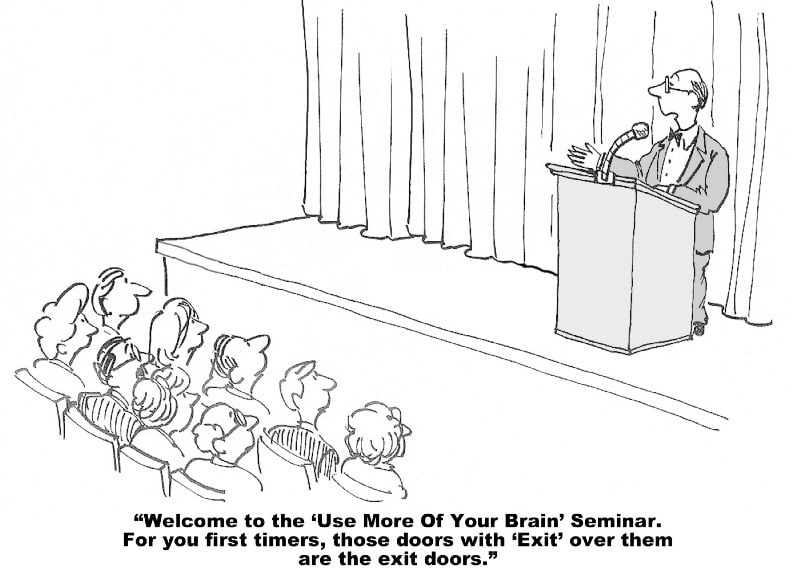
Image credit andrewgenn / Dollar Photo Club Standard License.
 | CLICK HERE to learn how to Maximize Success in YOUR workplace!. Bring Susan to your organization! |