
Co-teaching sounds simple until two adults are standing in the same classroom trying to decide, minute by minute, who is doing what.
That is where the struggle often begins.
Too many co-teachers are handed model names, but not the practical details they need to make those models work with real students, real schedules, limited planning time, and different levels of content expertise.
The Reference Guide that Solves the Problem
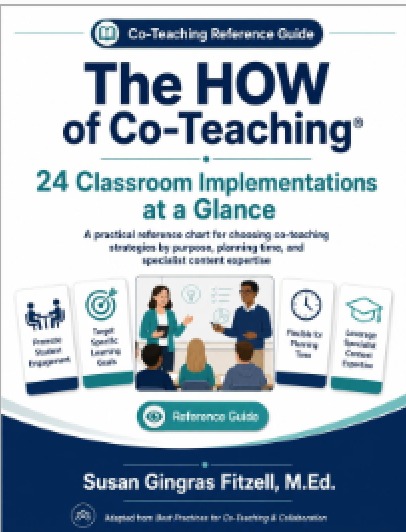
The HOW of Co-Teaching: 24 Classroom Implementations at a Glance gives teachers, specialists, instructional coaches, and administrators a quick, practical way to choose co-teaching approaches that fit the lesson.
Not the other way around.
Based on Chapter 2 of Best Practices in Co-Teaching and Collaboration: The HOW of Co-Teaching, Implementing the Models, this guide moves beyond “one teaches and one helps.” It shows what each adult can actually do during instruction so both professionals are used well.
Inside, you will find 24 co-teaching implementations organized by:
- Planning time required
- Specialist content expertise needed
- Best use for each approach
- What the implementation looks like in the classroom
- Chapter support for lesson chunks, co-planning, grouping, and routines
Use it during co-planning. Keep it handy for coaching conversations. Pull it out when a team is stuck in the same one or two models and needs a better option.
Co-teaching works best when roles are clear, planning is realistic, and both adults know how to contribute without stepping on each other or standing on the sidelines.
This guide gives teams a practical place to start.
FAQ
What is a co-teaching model?
A co-teaching model is a structured way for two educators to share instruction in the same classroom. Different co-teaching models help teams decide who leads, who supports, how students are grouped, and how both adults contribute during a lesson.
How do teachers choose the right co-teaching model?
Teachers choose the right co-teaching model by looking at the lesson goal, the amount of planning time available, the specialist’s content expertise, and what students need during instruction. The best model fits the lesson, rather than forcing the lesson into the same routine every time.
Why do co-teaching teams need more than model names?
Co-teaching teams need more than model names because knowing a label alone does not explain what each adult should actually do during instruction. Practical implementation details help teams clarify roles, avoid confusion, and use both professionals more effectively in the classroom.
Download the reference guide and choose the implementation that fits your next lesson.
Want more practical support for teachers?
I offer professional development for schools on co-teaching, collaboration, learning strategies, and supporting students who learn differently.
Education Programs & Workshops
Co-Teaching Training / Consulting
Free educator download
Substack sign-up
If you are here because you care about supporting teachers, you may also like:
Co-Teaching Support for Schools
Practical Learning Strategies for Struggling Students
Paraprofessionals and Teachers Working Together – Unlocking the Power of Collaboration for Student Success