What is Stimming?
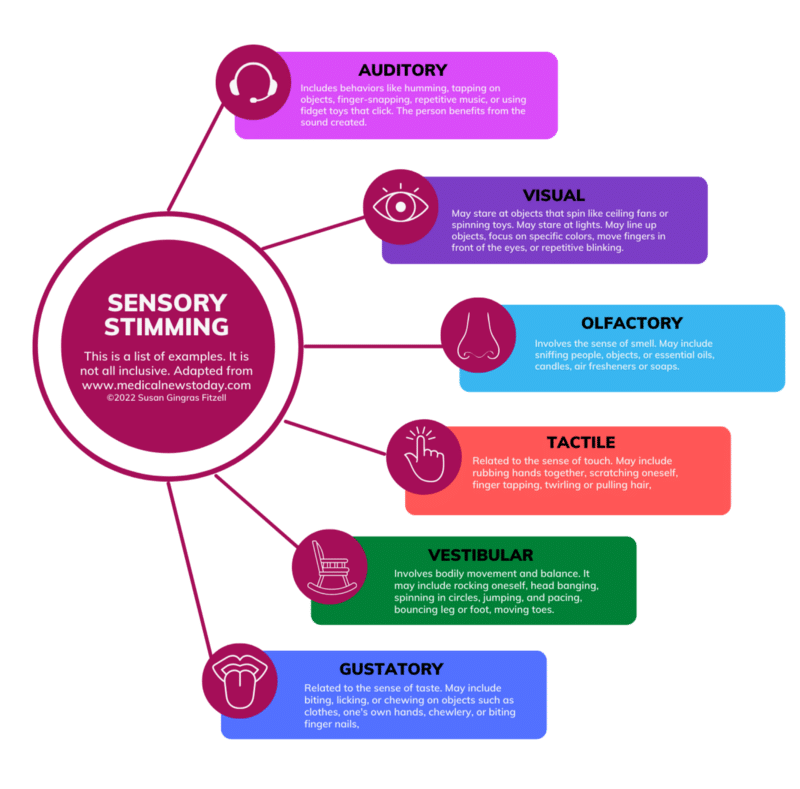
Stimming is short for self-stimulatory behavior. It includes repetitive movements or repeated use of objects, and it shows up in autistic people, people with ADHD, people with sensory processing differences, and plenty of neurotypical people, too.
Nail biting, leg bouncing, pen clicking, hair twirling, and chewing on a pencil all fit the same basic pattern. The difference is that neurodivergent stims can be more visible, more frequent, and sometimes unsafe, which is why they attract attention in classrooms, clinics, and workplaces.
The reframe matters: many stims are a form of self-regulation, not defiance. For some people, a stim adds input when the brain is under-stimulated. For others, it helps dampen or organize input when the environment is too loud, bright, busy, or unpredictable. Stimming can help regulate stress, anxiety, boredom, fear, emotional overload, sensory overload, and sometimes it is simply how a person expresses excitement and joy.
That is the practical “why” behind sensory rooms. A sensory room is a dedicated space that lets someone meet a sensory need safely, with less social judgment, and with fewer harmful coping behaviors. Instead of forcing a child or adult to spend their energy masking, a sensory room provides a controlled environment where regulation can happen faster and with less fallout.
Suppressing Stimming?
What went wrong for years is the same thing that happens with nail biting. People see the behavior and try to stop it without addressing the reason it started. When you suppress harmless stims because they look unusual to others, you remove a coping tool and increase stress. If a stim is harmful (skin picking, head banging, hair pulling), the answer still is not “ban it and move on.” The answer is “reduce risk while you solve the underlying need,” which often includes safer substitutes, environmental changes, and predictable ways to take breaks.
Sensory Rooms Accommodate Stimming in a Healthy Way
Sensory rooms support that approach. They can be simple or elaborate, but the best ones do the same core job: they give a person more control over sensory input and a place to reset before stress escalates. That can include tools for tactile input (fidgets, textured items), proprioceptive input (weighted lap pads or blankets), visual control (dimmers, lamps, reduced glare), and sound control (soundproofing, white noise, permission to use noise-canceling headphones).
This also is not “just a kid thing.” Children who stim grow into adults who still have sensory needs. In fact, sensory stress can compound at work because many neurodivergent adults are actively trying to look “fine” all day. When someone is spending effort to mask, it reduces bandwidth for focus, communication, and stamina. A sensory space is one concrete way to reduce that load, and it often helps neurotypical employees too. Quiet and control are not niche benefits; they are human benefits.
A workplace example makes the point. An employee in a bright, open office manages most days, but a personal stressor pushes their nervous system over the edge. They cannot think clearly, their breathing feels tight, their heart rate climbs, and concentration drops. A short reset in a private, darker room, with fewer inputs and a chance to use a calming body position, helps them regulate in about ten minutes and return to work. The lesson is not that the employee is “fragile.” The lesson is that capacity changes with cumulative stress, and having a predictable reset option prevents a small overload from becoming a full derailment.
If you are setting up a sensory room, design it around control and choice. Privacy matters. Lighting options matter. Sound options matter. Seating options matter. Include a few “input” tools (fidgets, textured items, chewable options) and a few “calm” tools (weighted items, soft blankets, a neutral couch, a yoga mat). Add a clear usage policy that keeps access fair and keeps the space respected, and pair it with culture cues that make it safe to use. A room no one feels permitted to use is a room that will not help.
Finally, use accurate language. Neurodiversity refers to the natural diversity of minds across humans. Neurodivergent describes an individual whose cognitive style diverges from dominant norms. Neurotypical describes the majority cognitive style. “Neurodiverse” is best used as an adjective for a group or environment, not for an individual person. Susan_Fitzell_Style_Guide_v1.0
FAQ
What is stimming, and who does it?
Stimming is self-stimulatory behavior, usually repetitive movements or repeated interaction with objects. Autistic people and people with ADHD or sensory processing differences may stim more visibly or more often, but many neurotypical people stim too (nail biting, leg bouncing, pen clicking, hair twirling).
Why do neurodivergent people stim?
Stimming is often a regulation strategy. It can reduce sensory overload, organize attention, manage stress or anxiety, prevent emotional overwhelm, or provide needed stimulation when the brain is under-stimulated. Sometimes it also expresses joy or excitement.
Should schools or workplaces stop stimming?
Stopping harmless stimming without addressing the underlying need usually increases stress and can worsen regulation. If a stim is unsafe or damaging, the goal is to reduce harm while meeting the sensory need in a safer way, not simply banning the behavior.
What is a sensory room, and what problem does it solve?
A sensory room is a dedicated space designed to support sensory regulation. It gives a person a controlled environment to reset, meet sensory needs safely, and return to learning or work with less escalation, less masking, and fewer harmful coping behaviors.
What should a simple sensory room include?
Start with privacy and environmental control: adjustable lighting, reduced noise or white-noise options, and comfortable seating or space to lie down. Add a small set of regulation tools like weighted lap pads or blankets, soft blankets, a yoga mat, a few fidgets or textured items, and clear guidelines for respectful use.
CLICK HERE to visit the articles page.
 FREE DOWNLOAD: Neurodiversity in the Workplace: Things to Consider Before You Jump On the Bandwagon
Neurodiverse hiring practices can benefit any company in any industry and in more areas than most people realize. The investment has yielded greater patenting, innovation, process improvement, efficiency, and creativity not only in technology industries but also in industries that include investment banking, insurance, and mortgage banking.
This resource explains the term “neurodiversity” and describes the potential positive impact on your business that can come from including neurodivergent individuals in your workplace.
Download Neurodiversity in the Workplace! – Free!
Bring Susan Fitzell, M.Ed., CSP
Top Neurodiversity Speaker
To YOUR Organization!