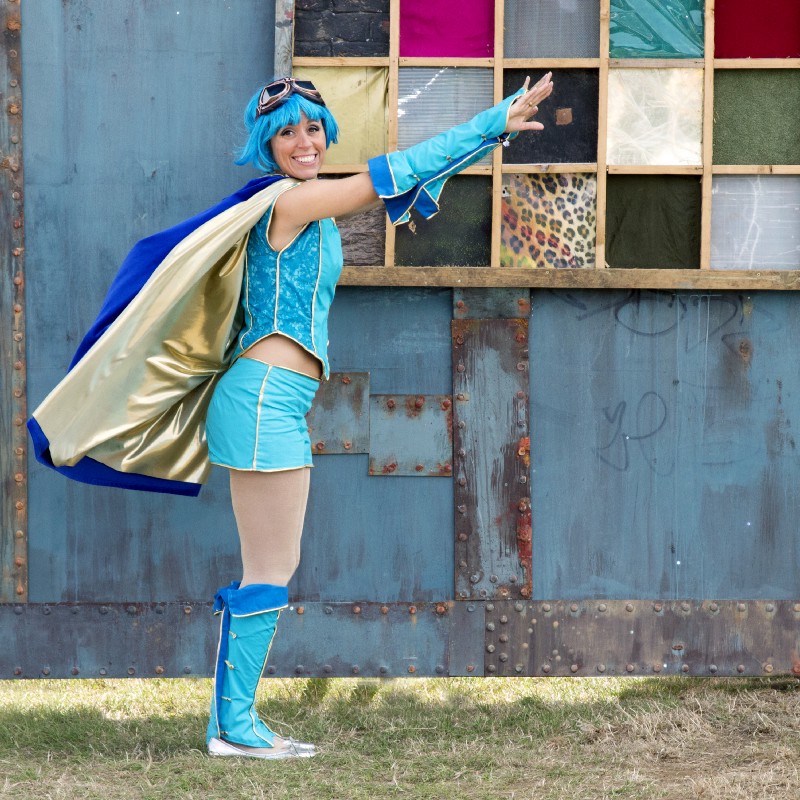
For all the acceptance that neurodivergence has been receiving, including workplace initiatives to recruit and train neurodivergent talent, we still have a long way to go to achieve equity and full inclusion. Stereotypes still shape hiring patterns, and too many hiring practices are built around those stereotypes.
I have often spoken about neurodiversity as a competitive advantage. I have cited workplace research and employer case studies showing that neurodiverse teams can strengthen innovation, problem-solving, and performance when people are supported well. But there is another side of this conversation that deserves equal attention.
I also believe that every human being has unique gifts. Yet there is growing concern about the “superpower” stereotype in neurodiversity conversations. This language shows up especially often in discussions of autism. It is time to bring those concerns into the open.
When neurodiversity hiring initiatives are introduced, there is often an assumption that the candidates will primarily be autistic, and that they will be savants or extraordinary outliers. At the same time, those same candidates are often expected to assimilate into a neurotypical work environment that was never designed with neurodiversity in mind. They are expected to exceed expectations while also adapting seamlessly to systems that may be actively working against them.
This superhuman expectation is especially common in workplace conversations about autism. Our tendency to rely on stereotypes about people who are different from us weakens hiring initiatives before they begin. Despite growing awareness, the autism employment gap remains significant. In the UK, ONS-linked reporting highlighted by the National Autistic Society found that only 22% of autistic adults were in any kind of employment. That is not a talent problem. It is a systems problem.
At a time when highly visible public figures are often used as shorthand for neurodivergent success, it is worth asking what that idealization has done to the broader picture of neurodivergence. More than one autistic colleague has asked me not to use celebrity examples as proof points. Stereotypes that suggest neurodivergent people must be geniuses, savants, or exceptional outliers can be deeply harmful. They affect self-worth, distort public understanding, and raise the bar so high that ordinary human strengths are ignored.
At its worst, this pressure contributes to masking. Masking, or camouflaging, is a coping strategy in which autistic people suppress or alter natural traits in order to fit social expectations. Research continues to show that masking is associated with emotional distress, exhaustion, anxiety, depression, and burnout.
What counts as acceptable neurodivergence – and who decides?
Organizations often try to define what an acceptable presentation of neurodivergence looks like. When neurodivergent people are not included in those discussions, the result is often arbitrary. Presumed exceptional attributes become the standard. Corporate narratives end up rooted in social misconceptions rather than lived experience. Inclusion becomes tokenized.
Well-known workplace platforms often describe neurodivergence as a competitive advantage, but too often they do so by spotlighting extraordinary mathematical ability, software brilliance, or unusual memory. That focus on “superpowers” sets unrealistic expectations. Instead of creating equity, it flips reality on its head. It can leave people believing that neurodivergent employees are somehow privileged because of unusual gifts, while ignoring the real barriers they face.
This pattern is not new. It has deep roots in pop culture. Research on autism stereotypes has long noted that media portrayals disproportionately emphasize savant abilities and exceptionalism.
Movies like Rain Man helped bring autism into public conversation, but they also reinforced a narrow image by centering savant syndrome. More recent examples have continued that pattern. Characters like Sheldon Cooper and Shaun Murphy are often portrayed through the lens of extraordinary intelligence, eccentricity, and exceptional skill. The result is a damaging question that hovers beneath the surface:
Is neurodivergence only considered legitimate when it comes with exceptional talent?
Revamping our hiring practices
Generalizing the entire neurodivergent population under one umbrella does very little to dismantle the stereotypes that guide many human resource decisions. Hiring systems that see neurodivergence in black and white leave candidates facing the same recurring problem: to be accepted into a neurotypical workplace, they must either camouflage their neurodivergence through masking or somehow prove themselves extraordinary enough to compensate for it.
Pop culture continues to promote the idea that exceptional talent is the only acceptable version of neurodivergence. Hiring practices often mirror that belief.
This critique of the savant stereotype is not a call to lower expectations. It is a call to raise awareness. Employers need to become aware of the stereotypes that do not serve organizations seeking to build truly diverse, equitable, and inclusive workplaces.
If companies want neurodiversity hiring initiatives to succeed, they need to move beyond the search for brilliance wrapped in conformity. They need to stop asking whether a candidate seems exceptional enough to justify support. They need to ask whether the hiring process is actually measuring job capability or simply rewarding the people who best match a narrow social norm.
A neuroinclusive workplace does not assume every neurodivergent person is a genius. It does not expect people to be superhuman. It creates conditions where a wide range of minds can contribute, grow, and succeed.
References
Austin, R.D., and Pisano, G.P. “Neurodiversity as a Competitive Advantage.” Harvard Business Review, 2017.
Draaisma, D. “Stereotypes of Autism.” Philosophical Transactions of the Royal Society B, 2009.
Heasman, B. “Employers may discriminate against autism without realising.” London School of Economics Blogs, 2017.
Pearson, A. and Rose, K. “A Conceptual Analysis of Autistic Masking: Understanding the Narrative of Stigma and the Illusion of Choice.” Autism in Adulthood, 2021.
Neurodiversity Definition
Neurodiversity: This term refers to the natural diversity of human minds. It includes people who are neurotypical and neurodivergent. When I talk about promoting neurodiversity in the workplace, I am referring to creating a workforce that reflects the broad spectrum of ways people think, process information, communicate, and learn. Some employees may be neurotypical, while others may have ADHD, dyslexia, autism, trauma-impacted ways of thinking, or other differences in how they move through the world.
Neurodiverse: This word is best used as an adjective to describe a group, team, or workplace. For example, you can say that a workplace is neurodiverse.
Be careful, though, because you should not describe one person as neurodiverse. An individual person should be described as neurodivergent.
Neurodivergent: This word describes an individual whose way of thinking, processing, or learning differs from what is considered neurotypical. You may also see it abbreviated as ND.
Many neurodivergent people may have a diagnosis or label you recognize, such as autism, dyslexia, or ADHD. Neurodivergence may also include epilepsy, brain injury, or other differences in how a person processes the world.
FAQ
What is the “superpower” stereotype in neurodivergent hiring?
The “superpower” stereotype is the idea that neurodivergent candidates, especially autistic candidates, are valuable only if they bring extraordinary or savant-level abilities. This stereotype can distort hiring decisions by creating unrealistic expectations and overlooking capable people whose strengths are real but not sensationalized.
Why is the savant stereotype harmful in the workplace?
The savant stereotype is harmful because it narrows how employers define value. Instead of recognizing a wide range of strengths, employers may expect neurodivergent candidates to be exceptional outliers. That can lead to tokenism, biased hiring, masking, and missed opportunities to build truly inclusive teams.
How can companies make neurodivergent hiring more inclusive?
Companies can improve neurodivergent hiring by focusing on actual job skills rather than stereotypes, involving neurodivergent voices in decision-making, using skills-based assessments, and designing workplaces that do not require people to mask or conform to narrow social norms in order to succeed.
Photo by Michelle Cassar on Unsplash
 | CLICK HERE to learn how to Maximize Success in YOUR workplace!. Bring Susan to your organization! |