
Most companies say they want to hire the best person for the job, but then they run an interview process that rewards the best performer in the interview room. There is a big difference between hiring the best person for the job and the best actor in the interview process. The two are not the same thing.
Traditional interviews often reward social performance over job competence, which can disadvantage neurodivergent candidates and cause employers to miss top talent. They also reward people who can think out loud in real time with a perfect stranger, under pressure, while being judged. If that sounds like a mini performance, it sounds that way because that is exactly what it is. And that is where many neurodivergent candidates get filtered out of the hiring process.
What Traditional Interviews Actually Measure
When we call an interview a conversation, we are not being honest. A typical interview has its own hidden rules. Candidates must be able to make small talk. They must be able to read the room, which is challenging, especially when most interviews in this hybrid world are happening via Zoom. Candidates must show the right enthusiasm, answer questions quickly, and not pause too long.
It is often considered a ding on someone’s performance if they ask for a question to be repeated or do not answer the interviewer “correctly.” They also cannot be too direct or too detailed in their response. And depending on the person doing the interviewing, these rules can change.
None of those social requirements fit the typical job requirements. Unless it is a sales job, or a job where the candidate will be interfacing with clients or the public, these social skills may have nothing to do with job requirements or job performance.
The interview is an audition. For neurodivergent candidates, that audition can be a barrier even when their actual work is excellent.
Why Neurodivergent Candidates Struggle in Standard Interviews
The acting barrier is real
Many autistic candidates, for example, are not flat or emotionless. They are regulated. They may not display emotion in the way an interviewer expects them to. If your hiring team equates warm and animated with competent, you are going to miss people who have the right qualities to do a job but communicate in a way that is different than social norms would expect.
Processing speed gets mistaken for capability (or lack of)
Some people need a moment to think before they can answer a question. Some need to hear the full question and then organize their response before they speak. When interviews reward speed, they are not selecting people for expertise. They are selecting verbal agility under pressure. That can disadvantage people with ADHD, auditory processing differences, or anxiety, even when they know the material well..
Confidence is not competence
We all know there are candidates who can sell anything, including themselves. Heck, I was one of them. I was very good at interviewing because I have always been verbally adept. Unfortunately, not everyone has that skill. Interviews reward candidates who are verbally adept at selling themselves.
Meanwhile, many neurodivergent candidates are very literal and honest. Now I am also literal and honest, but somehow that did not hinder me in an interview. I was really good at putting on the confidence hat. Entering an interview feeling like you know everything can sometimes be an advantage. As an undiagnosed autistic woman, I had no doubts about the knowledge that I had hyperfocused on and gained over years of study.
I remember telling an interviewer that I would be an asset in the job I was interviewing for. In this case, the interviewer was offended that I would claim I was an asset and said he would make that decision. But then he hired me.
I may have been literal and honest, but I was also overly confident. Confidence does well in an interview. On the contrary, if an interview candidate says things like “it depends,” because it does, and they do not oversell their talents, they may come across as less than stellar for the job.
If your team has a bias toward confidence, you will regularly hire the best storyteller, maybe not the best contributor.
Here is the hard truth: companies often confuse “I feel good about this person” with “this person will do the job well.”
The Writer I almost Lost to “Culture Fit”
I recently interviewed a writer over Zoom. She had a flat affect. No animation. Slow, deliberate responses. Under standard corporate interview scoring, she would have been labeled “low energy,” “not engaging,” or “not a fit.”
But I have learned the hard way that those labels are often meaningless. They tell you whether someone can perform in an interview. They do not tell you whether someone can do the job.
So I ignored the social performance and gave her a skills-based assessment. Her writing was excellent.
Later she told me she is autistic and that she communicates far better in writing than speaking. That was not a surprise. It was a confirmation.
She is now one of my top-performing writers. Most organizations would have filtered her out because she did not “act” the part in a video call. That is not a talent problem. That is a process problem.
Why Fair Hiring Does Not Mean Identical Hiring
A common reason companies resist adjustments is the belief that fairness means treating everyone exactly the same. In real life, fairness means giving everyone a clear chance to show what they can do.
In my work, I talk a lot about structure. When roles, expectations, and communication are clear, people perform better. When things are vague, people guess. And guesswork causes problems. The same is true in hiring.
If your interview process is built on ambiguity and social decoding, you are not being neutral. You are selecting for one communication style.
Reasonable adjustments that actually work
You do not need a complicated program. You need a smarter design.
Here are changes that raise the signal and reduce the noise.
Provide questions in advance
This is one of the simplest fixes and one of the most powerful. It reduces anxiety and lets candidates organize their thinking. You learn what they know, not just how quickly they can retrieve it under stress.
How to Make Interviews More Skills-Based and Inclusive
If you are hiring a writer, look at writing. If you are hiring an analyst, look at analysis. If you are hiring a project manager, give them a realistic planning scenario.
The secret is simple: test the job, not the performance.
Use working sessions instead of interrogation-style interviews
Some companies do “hangouts” or working sessions instead of formal interviews. That can be a better environment for many candidates, especially if it allows them to demonstrate skill in context. Less theater. More reality.
Offer multiple response formats
Let candidates answer in writing for part of the process. Let them take notes. Let them ask to hear the question again. These are not special favors. They are basic supports that improve the quality of information you get.
The Risk of Automated Screening in Hiring
Resume filters that penalize spelling can screen out dyslexic talent. Tools that judge facial expression can penalize autistic candidates. Even if a tool is marketed as “objective,” it can quietly bake in bias.
If you want fewer bad hires, do not hand the first cut to an opaque system that was not designed for neurodivergent variance.
The Cost of Getting This Wrong
When companies filter for social performance, they lose strong technical talent. They lose original problem-solvers. They lose people who are direct, accurate, and consistent. They lose employees who often thrive with clear expectations and good systems.
They also create a workplace where people feel pressure to mask. That leads to burnout, lower engagement, and higher turnover. And they miss an opportunity that is sitting right in front of them.
Because the goal is not to “accommodate” people into the job. The goal is to build a process that measures the right things.
A Better Question for Hiring Teams
Instead of asking, “Would I like to work with this person?” ask, “What would I need to put in place so this person can do their best work?”
That shift is leadership. It is also good business.
FAQ
Why do traditional interviews disadvantage some neurodivergent candidates?
Traditional interviews often reward eye contact, fast responses, social ease, and confident delivery. Those traits may reflect interview performance rather than actual job ability, which can disadvantage neurodivergent candidates who communicate or process information differently. Guidance from CIPD and SHRM supports more neuroinclusive recruitment practices that reduce these barriers.
What is a better alternative to a standard interview?
A better alternative is to add skills-based assessments, work samples, realistic scenarios, or structured working sessions that let candidates demonstrate the job itself. SHRM and other HR guidance note that exercise-based assessments and work simulations can provide a clearer picture of talent than interview performance alone.
Can automated hiring tools create bias for neurodivergent candidates?
Yes. Automated screening tools can create or amplify bias if they penalize differences in spelling, facial expression, communication style, or response patterns. The EEOC has specifically warned that AI and related technologies used in employment decisions can create discrimination risks if not carefully designed and monitored.
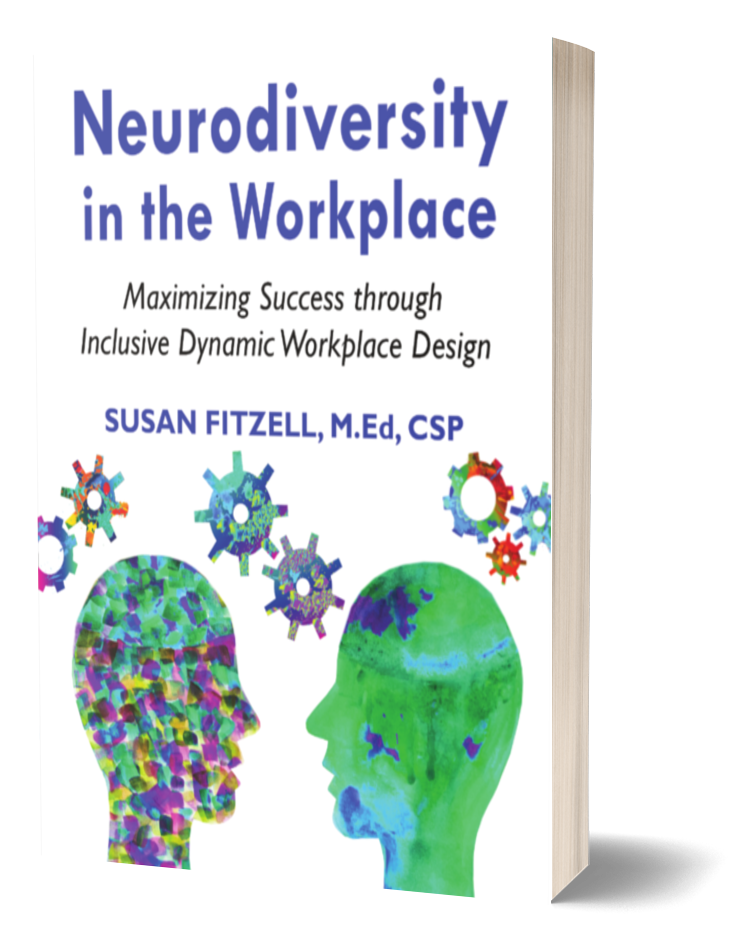 | CLICK HERE to learn how to Maximize Success in YOUR workplace!. Bring Susan to your organization! |